
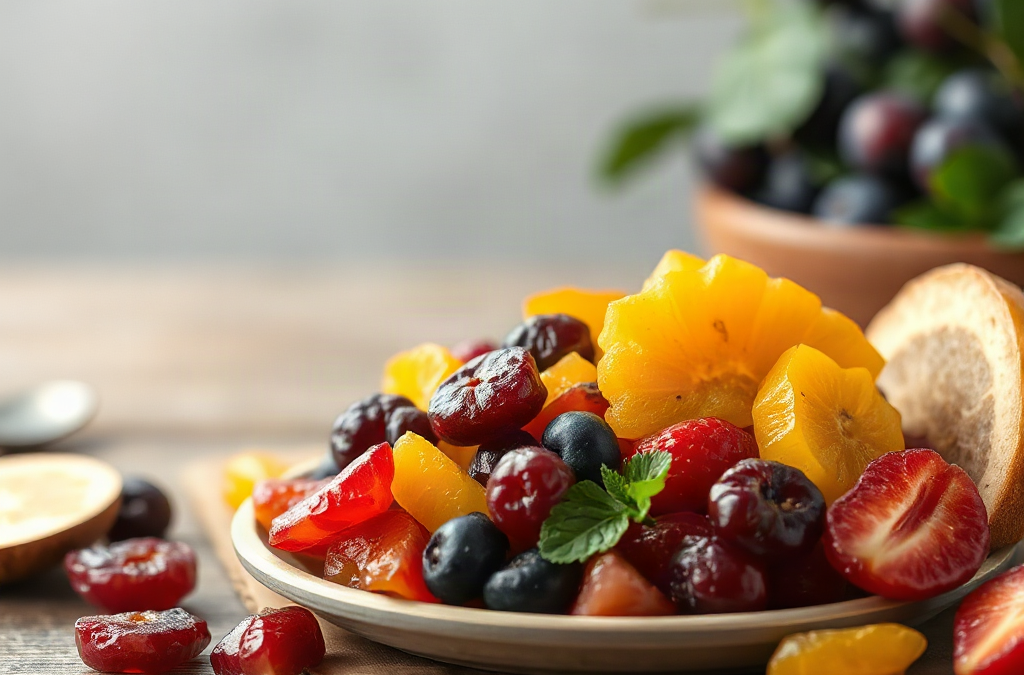
Organic dried fruit portions and added sugar checks work best when you compare the serving size with the actual amount you eat and inspect the ingredient list for sweeteners. Dried fruit is concentrated because water has been removed, so a small handful can represent several pieces of fresh fruit and may deliver substantial natural sugar. Choose products whose ingredients list names fruit without added sugar when that matches your needs, then portion them into a small bowl rather than eating from the package. Candied fruit, sweetened cranberries, fruit snacks, and coated blends need closer scrutiny because their sweetness may come partly from added sugars.
Why Dried Fruit Portions Need a Different Approach
Dried fruit is fruit with much of its water removed, which changes how quickly a serving can be eaten and how much fruit fits into a small volume. Raisins, dried apricots, dates, figs, mango, and cherries may still provide fiber and various micronutrients, but their sugars become more concentrated by weight and volume. A bowl that looks modest may contain far more fruit than someone would ordinarily eat fresh.
That concentration makes portion awareness more useful than judging a serving by appearance. A few dried apricot halves may feel substantial, while small raisins can disappear into a large handful. A practical first move is to use the package serving size as a reference, then measure it once into a small dish. After that visual check, you can often estimate a similar portion without weighing every snack.

Natural sugar and added sugar are separate questions. The sugars naturally present in fruit remain after drying, even when the ingredient list contains only fruit. Added sugar refers to sweeteners introduced during processing, such as cane sugar, syrup, glucose, dextrose, or concentrated sweetening ingredients. The total sugars line on the Nutrition Facts label includes both, so it cannot by itself show whether a product was sweetened.
For example, unsweetened raisins may taste intensely sweet because their water has been reduced, while sweetened dried cranberries may contain both cranberry sugars and added sweetener. Neither product becomes automatically unsuitable, but they serve different decision needs. Someone adding fruit to oatmeal may prefer unsweetened pieces, while a recipe may specifically call for sweetened fruit and require a smaller amount to preserve balance.
A common mistake is assuming that an organic label means a product contains no added sugar. Organic certification and ingredient composition answer different questions. An organic dried-fruit product may still contain organic cane sugar, organic syrup, oil, or other ingredients. Use the organic claim as one purchasing criterion, then evaluate portion size and ingredients separately. For more context on making product-level decisions, see Organic dried fruit portions and added sugar checks.
How to Check for Added Sugar on the Package
The ingredient list is the clearest place to identify added sweeteners, while the Nutrition Facts panel helps you understand the amount of carbohydrate and sugar in the stated serving. Read both rather than relying on front-of-package phrases such as “naturally sweet,” “made with fruit,” or “no refined sugar.” Those phrases may describe taste or formulation without answering whether a sweetening ingredient was added.
Look near the beginning of the ingredient list first, because ingredients are generally listed by weight. A plain product may list one fruit, such as “organic raisins” or “organic dried apricots.” A sweetened product may list fruit followed by sugar, syrup, fruit juice concentrate, or another sweetener. “Fruit juice concentrate” can sound wholesome, but when it is used to sweeten a dried-fruit product, it still contributes added sugars.
Terms worth checking include sugar, cane sugar, brown sugar, honey, agave, maple syrup, corn syrup, rice syrup, glucose, dextrose, maltose, and fruit juice concentrates used as sweeteners. Some products also use a coating or glaze. A dried mango strip, for instance, may contain mango, sugar, and oil; a cranberry blend may include cranberries, sugar, and oil to manage tartness and texture.
The serving-size line deserves equal attention. A label may list a serving in grams, cups, or pieces, while the package contains several servings. If you eat directly from the bag, the label’s numbers may understate your intake simply because the reference serving was smaller than your actual portion. Divide the package into individual containers if the product will be used during commutes, workdays, or children’s snacks.
Do not treat the absence of added sugar as a reason to ignore portion size. Unsweetened dates and raisins can still provide a concentrated amount of carbohydrate in a compact serving. Conversely, a product with some added sugar is not necessarily the wrong choice if you use a modest amount in trail mix or baking. The useful question is whether the ingredient profile and quantity fit the way you plan to eat it.
When comparing two packages, use the same serving basis if possible. A product that appears lower in sugar may simply list a smaller serving. Compare ingredients first, then compare total sugars and added sugars per equal weight or equal planned portion. The label-reading method also applies when reviewing organic dried fruit portions and added sugar checks for mixed products that include nuts, grains, or chocolate.
Choosing Portions for Snacks and Meals
A useful portion is the amount that fits the eating occasion, not a fixed number that works for everyone. Dried fruit eaten alone may be more satisfying when paired with nuts, plain yogurt, cottage cheese, or another source of protein and fat. In oatmeal, grain bowls, salads, or baked dishes, a small amount can distribute sweetness across the entire meal instead of becoming a separate high-sugar snack.
Start with the package serving as a measuring reference, but adjust for the rest of the food. A snack made from dried fruit and nuts may need less fruit than a pre-workout snack where the person specifically wants easily available carbohydrate. Someone adding chopped dates to overnight oats may use only a few pieces because the oats already contain fruit, milk, or another sweet ingredient. Portion decisions should reflect the complete meal rather than the dried fruit in isolation.
A compact checklist can make the decision faster:
- Identify whether the product is whole dried fruit, sweetened fruit, candied fruit, or a fruit-based snack.
- Read the ingredient list for sugar, syrups, concentrates, coatings, and oils.
- Check the stated serving size and compare it with the amount you intend to eat.
- Decide whether pairing the fruit with protein, fat, or a higher-volume food would better suit the occasion.
- Store the planned amount in a dish or container instead of eating from the package.
Texture also affects portion behavior. Small raisins or chopped fruit are easy to eat quickly, while larger dried apricots or leathery figs may slow the pace and make the amount more visible. A blend containing chocolate, yogurt coating, or salted nuts changes the nutritional profile and may encourage eating beyond the fruit portion. Reading the blend as a complete product prevents the mistake of focusing only on the fruit name on the front.
People managing diabetes, dental concerns, gastrointestinal symptoms, or a medically prescribed eating plan may need more individualized guidance. Dried fruit is not a treatment or a guaranteed solution for any health condition. A dietitian or clinician can help match the type and amount with medication, carbohydrate targets, digestive tolerance, and the rest of the diet. For general shoppers, a smaller planned serving and a clear ingredient check are more reliable than banning every sweet-tasting dried fruit.
Product Comparisons, Mistakes, and Practical Shopping
The most useful comparison is often plain dried fruit versus sweetened dried fruit, not organic versus conventional alone. Organic status may matter to a shopper’s agricultural or purchasing preferences, but it does not tell you whether sugar was added or whether the serving is appropriate. Compare the ingredient list, processing style, texture, package size, and intended use together.
Plain raisins and sweetened cranberries illustrate the difference. Raisins generally have a naturally sweet flavor after drying and may need no additional sweetener. Cranberries are naturally tart, so many commercial dried versions add sugar to make them more palatable. Neither example should be generalized to every brand; the package remains the deciding source. A “no added sugar” cranberry product may use a different formulation, while a fruit blend may include sweetened pieces alongside plain ones.
Candied fruit is a separate category because it is commonly cooked or coated in a concentrated sweet solution. It can work as a baking ingredient, but it should not be assumed to be interchangeable with plain dried fruit in a snack. Fruit leather and fruit snacks also require attention because the product may be puréed, sweetened, portioned into strips, or combined with other ingredients. The word fruit on the front does not establish the product’s sugar profile.
Shopping becomes easier when you decide the use before choosing the package. For everyday snacking, look for a short ingredient list and a package size that makes portioning straightforward. For baking, prioritize the texture and sweetness needed by the recipe, then reduce the amount elsewhere if the fruit is sweetened. For toppings, chopped unsweetened fruit may provide enough flavor without turning the entire bowl or salad into a dessert-like dish.
Several weak assumptions commonly lead to poor choices:
- “Organic means unsweetened.” Certification does not remove the need to inspect ingredients.
- “Natural sugar does not count.” Naturally occurring sugar still contributes to the product’s total carbohydrate.
- “One handful is a serving.” Hand size and fruit size vary, especially with raisins and chopped pieces.
- “No added sugar means unlimited.” Concentrated fruit can still be easy to overeat.
Signs that your approach is working include knowing the product’s ingredients, consistently serving an intentional amount, and using the fruit in a meal pattern that leaves you satisfied. Signs it needs adjustment include repeatedly eating from the bag, choosing coated blends while thinking they are plain fruit, or finding that the portion displaces more filling foods. A simple container, a smaller package, or a plain variety may solve the problem more effectively than relying on willpower. The same reasoning can guide Organic dried fruit portions and added sugar checks when comparing products across different stores.
Frequently Asked Questions
Does organic dried fruit have less sugar?
Not necessarily. Organic certification does not determine whether the fruit’s natural sugars are lower or whether a sweetener was added. Check the Nutrition Facts panel and ingredient list.
How can I tell whether dried fruit has added sugar?
Read the ingredients for sugar, syrups, honey, juice concentrates used as sweeteners, or similar terms. The total sugars line alone does not separate natural from added sugar.
Is unsweetened dried fruit a better choice?
It may be a better fit when you want the fruit’s sweetness without an added sweetener, but portion size still matters because drying concentrates the fruit.
What is a practical way to portion raisins or dates?
Use the package serving as a starting reference, measure it into a small container, and pair it with a meal or snack component such as nuts, yogurt, or oats.
Are sweetened dried cranberries the same as plain dried fruit?
No. Many dried cranberry products add sugar because cranberries are tart. Compare the ingredient list and serving information before treating them as equivalent.
Conclusion
Smart choices with organic dried fruit come from separating three questions: what fruit is present, whether a sweetener was added, and how much you plan to eat. Use the ingredient list to identify sugar and syrups, the Nutrition Facts panel to understand the stated serving, and a small dish or container to make the portion visible. Plain raisins, dates, apricots, and figs can fit differently from sweetened cranberries, candied fruit, coated blends, or fruit snacks. Organic labeling may matter for your purchasing preferences, but it does not replace label reading. Choose the least complicated product that suits the occasion, pair concentrated fruit with more filling foods when useful, and adjust the amount when the package encourages mindless eating.
Huge Discount on the Best Certified Organic Nutrient Dense Supplement!

Related Content
- How to Choose Organic Fruits Without Breaking the Bank: Smart Shopping Tips and Budget Strategies
- Does Organic Produce Spoil Faster Than Conventional Options: Understanding Shelf Life and Storage Methods
- Budget-Friendly Whole Food Meal Prep Ideas
- Best Organic Nutrition in Collegeport Texas
- Unlocking Health Benefits: Why Your Diet Needs Organic Antioxidants for Optimal Living