
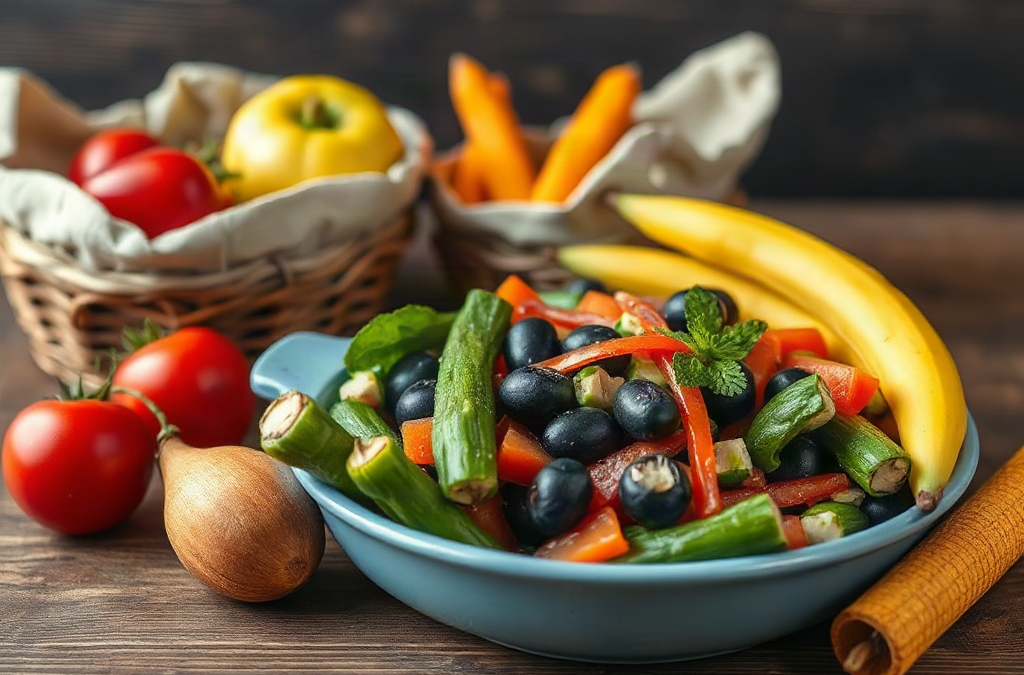
Seasonal produce substitutions preserve meal nutrition most reliably when replacements match the original ingredient’s nutrient role, serving size, and preparation method rather than merely its color or texture. Replace leafy greens with other vitamin K- and folate-rich greens, orange vegetables with carotenoid-rich alternatives, and juicy fruit with similarly vitamin C-rich produce. Account for differences in fiber, water content, carbohydrate density, and cooking losses when adjusting portions. Frozen produce is often a sound fallback when fresh seasonal options are limited, while sauces, juices, and heavily sweetened canned products may change the meal’s nutritional profile substantially.
Match the Nutrient Function Before the Ingredient
A useful substitution begins by identifying what the original produce contributes to the meal. Spinach in an omelet supplies more than green color: it contributes folate, vitamin K, carotenoids, and some fiber. Replacing it with iceberg lettuce would preserve appearance but not cooking performance or nutrient density. Kale, Swiss chard, beet greens, or collards are closer seasonal choices, although their stronger flavor and firmer leaves may require chopping and longer cooking.
The same reasoning applies to fruit. Strawberries in a breakfast bowl provide vitamin C, water, fiber, and natural sweetness. An out-of-season replacement does not have to taste identical, but it should cover most of those functions. Kiwi, citrus segments, guava, or frozen berries may fit better than dried fruit. Dried fruit offers useful minerals and fiber, yet its low water content concentrates carbohydrate and calories into a smaller volume. A handful of raisins therefore does not function nutritionally or physically like a bowl of fresh berries.

Start with the nutrient that matters most in the finished meal. If the rest of the plate already contains plenty of fiber but little vitamin C, prioritize citrus, cabbage, broccoli, kiwi, or peppers. If the meal lacks dark-green vegetables, choose a leafy substitute rather than treating any vegetable as interchangeable. For a soup that needs bulk and potassium, potatoes, winter squash, turnips, or parsnips may all work, but squash generally contributes more carotenoids while potatoes contribute more starch.
A compact substitution check keeps the decision practical:
- Primary nutrient role: vitamin C, carotenoids, folate, vitamin K, potassium, fiber, or another meaningful contribution.
- Meal role: main vegetable, fruit serving, aromatic base, sauce component, garnish, or starch-like produce.
- Form and portion: fresh, frozen, canned, dried, raw, cooked, and the amount actually eaten.
- Preparation effect: whether heat, draining, peeling, or added sugar changes the result.
The common mistake is searching for a perfect one-for-one ingredient twin. Seasonal crops vary by climate and availability, so an exact match may not exist. Matching two or three important functions is usually more realistic. That principle makes Seasonal produce substitutions that preserve meal nutrition easier to apply without turning every grocery decision into a nutrient calculation.
Use Produce Families to Find Reliable Seasonal Replacements
Produce families offer a practical starting point because related ingredients often share culinary properties and overlapping nutrients. Dark leafy vegetables can usually replace one another in sautés, soups, grain bowls, and egg dishes. Cruciferous vegetables such as broccoli, cauliflower, Brussels sprouts, cabbage, and kale commonly contribute fiber, vitamin C, vitamin K, and plant compounds, although their exact amounts differ. Rotating within these groups protects meal structure better than swapping solely according to shape.
For carotenoid-rich produce, move among carrots, sweet potatoes, pumpkin, butternut squash, and other deep-orange winter squash. A summer recipe built around roasted red peppers could use roasted squash during colder months when the goal is color and carotenoids, but the result will be sweeter, denser, and lower in vitamin C. Adding cabbage slaw or citrus to the plate can cover part of that difference. This is a better correction than assuming orange color guarantees an identical nutritional profile.
Vitamin C substitutions are especially flexible. Citrus, kiwi, strawberries, guava, cabbage, broccoli, and sweet peppers can all contribute meaningful amounts. Their culinary uses are not equivalent, however. Cabbage can replace lettuce in a winter taco because it supplies crunch and tolerates storage, while orange or grapefruit alongside the meal can replace some of the fresh acidity expected from tomato salsa. For people taking medications affected by grapefruit, another citrus fruit may be more appropriate; individual medical restrictions still take priority over a general substitution.
Alliums also deserve deliberate treatment. Onions, leeks, scallions, shallots, and garlic provide flavor that can reduce reliance on salty sauces, but they are not nutritionally equivalent to a full vegetable serving in the small quantities commonly used. Replacing a cup of vegetables with a spoonful of sautéed garlic may improve aroma without preserving fiber or meal volume. Keep an actual vegetable serving in the dish.
Use seasonal groups as flexible boundaries rather than guarantees. Soil, variety, maturity, storage, and cooking all influence nutrient content. A mixed approach is often stronger than one substitute: cabbage plus citrus may replace the crunch, fiber, and vitamin C roles of a tomato-heavy summer salad more successfully than either ingredient alone. The substitution is working when the plate retains a substantial produce portion, varied color, satisfying texture, and a similar role in the meal. It is failing when produce shrinks to a garnish or becomes mostly syrup, juice, or sauce.
Adjust Portions and Cooking Methods After a Swap
Serving size and preparation can change a seemingly sensible replacement. Leafy greens collapse during cooking, mushrooms release water, and winter squash becomes dense and soft. If a recipe calls for two cups of raw spinach, two cups of raw collards may produce a tougher dish unless the collards are sliced thinly and cooked longer. Conversely, substituting watery zucchini for roasted root vegetables can leave a tray soggy and produce a less filling side.
Compare ingredients in the form served rather than by an arbitrary visual measure. A cup of raw greens and a cup of cooked greens represent very different amounts of plant material. Dried, juiced, and puréed produce also change how quickly a portion is consumed. Whole oranges supply intact pulp and fiber, while orange juice removes much of that structure and is easy to drink in a larger quantity. Juice may provide vitamin C, but it should not automatically replace whole fruit whenever fullness and fiber are part of the meal’s purpose.
Cooking introduces another tradeoff. Heat can reduce some heat-sensitive or water-soluble vitamins, especially when vegetables are boiled and the liquid is discarded. That does not make cooked produce nutritionally empty. Cooking softens plant tissue, can make some compounds more available, and often makes larger portions of greens or vegetables easier to eat. Steaming, microwaving, roasting, sautéing, or using cooking liquid in soup can limit unnecessary nutrient loss while producing an appealing result.
Consider a winter pasta that normally uses fresh tomatoes and spinach. Canned tomatoes provide a practical tomato base, while frozen spinach can supply the leafy component. Choose canned tomatoes without excessive added sodium when that matters to the rest of the meal, and avoid draining tomato liquid that belongs in the sauce. If using kale instead of spinach, add it earlier and remove thick stems. The dish does not need exact nutrient equality; it needs a comparable vegetable presence without introducing large amounts of salt, sugar, or saturated fat through the replacement.
Frozen vegetables and fruit are often useful because they are prepared soon after harvest and require little trimming. Plain frozen berries, broccoli, peas, spinach, and mixed vegetables can bridge seasonal gaps with less spoilage. Canned options also work when selected thoughtfully: fruit packed in water or juice differs from fruit in heavy syrup, and vegetables can be drained or rinsed when sodium is a concern. A frequent error is rejecting preserved produce while buying fresh items that deteriorate unused. The food that reaches the plate has more practical value than produce lost in the refrigerator.
Build Balanced Meals When No Close Substitute Exists
A meal can preserve its nutritional balance even when no single seasonal ingredient duplicates the original. Divide the missing ingredient’s functions among two foods. If fresh peppers supplied vitamin C, crunch, and volume in a summer grain bowl, winter cabbage can provide crunch and bulk while citrus supplies acidity and vitamin C. If berries supplied fruit, fiber, and color at breakfast, chopped pear plus a spoonful of frozen berries can keep the fruit serving substantial without depending on expensive imported berries.
Look beyond produce when the missing contribution is protein, fat, or sustained energy. Avocado is botanically a fruit, but its culinary role includes unsaturated fat and creamy texture. Replacing it with cucumber preserves freshness but not fat or satiety. A better seasonal plate might use cucumber or shredded cabbage for produce volume and tahini, nuts, seeds, or olive oil for fat. Likewise, green peas contribute more protein and starch than leafy greens; swapping them for lettuce changes the balance unless beans, lentils, whole grains, eggs, fish, poultry, tofu, or another protein source remains elsewhere in the meal.
Use the whole plate as the unit of comparison. A substitution is more likely to preserve meal nutrition when the finished plate still contains a generous produce component, a suitable protein source, an energy-providing carbohydrate when needed, and enough fat for flavor and satisfaction. Individual needs vary with age, activity, allergies, health conditions, medication use, and overall dietary pattern, so no seasonal swap should be treated as a treatment or guaranteed health intervention.
Budget and waste also shape the best choice. Buying a large winter squash can be economical only if it will be cooked, portioned, and used across several meals. One batch might become a roasted side, soup base, and grain-bowl topping. Cabbage lasts well and works raw or cooked, making it a practical replacement for delicate greens in households that shop less often. Pre-cut produce costs more but may be worthwhile when time, mobility, or preparation capacity would otherwise prevent use.
Track outcomes at the kitchen level. A successful substitution tastes appropriate, cooks predictably, keeps a meaningful produce serving in the meal, and gets eaten before spoiling. Warning signs include relying repeatedly on juice instead of whole fruit, replacing vegetables with refined starches, adding heavy sauces to make an unsuitable substitute palatable, or shrinking portions because the replacement is inconvenient. A simple meal plan built around Seasonal produce substitutions that preserve meal nutrition should remain flexible enough to accommodate local harvests, freezer staples, cost, and personal preferences.
Frequently Asked Questions
Does a substitute need to contain exactly the same nutrients?
No. Aim to preserve the ingredient’s main nutritional and culinary functions across the complete meal. Two complementary foods can cover a gap more realistically than one exact replacement.
Is frozen produce as useful as fresh produce for seasonal substitutions?
Plain frozen produce is often a practical substitute, especially when fresh choices are costly or likely to spoil. Check for added sauces, sugar, or salt and prepare an appropriate portion.
Can canned vegetables replace fresh vegetables?
Yes. Select versions that suit the meal, compare sodium when relevant, and drain or rinse vegetables if appropriate. Canned tomatoes, pumpkin, beans, and vegetables can extend seasonal availability.
What is the best replacement for out-of-season berries?
Plain frozen berries are the closest option. Kiwi, citrus, pears, or apples can also provide fruit and fiber, but combining them with a small amount of frozen berries may better preserve color and flavor.
Should color be used to choose a produce substitute?
Color offers clues but does not prove nutritional equivalence. Pair it with the produce family, major nutrients, portion size, and preparation method before deciding.
Conclusion
Effective seasonal substitutions are judged by the finished plate, not by whether one ingredient perfectly imitates another. Identify the missing produce item’s main contribution, then match its nutrient role, meal function, portion, and cooking behavior. Use related produce families where they fit, and combine foods when one replacement cannot supply the needed fiber, vitamin C, carotenoids, texture, or volume. Plain frozen and carefully chosen canned produce can prevent seasonal gaps and reduce waste. Before serving, check that vegetables or fruit still occupy a meaningful place in the meal and that sugar, sodium, juice, or rich sauces have not displaced the original benefit. Keep a short list of locally available alternatives for leafy greens, orange vegetables, vitamin C sources, and fruit so future swaps become routine rather than improvised.
Huge Discount on the Best Certified Organic Nutrient Dense Supplement!

Related Content
- The Ultimate Guide to the 10 Best Organic Supplements for 2025
- Revitalize Your Gut: Discover How Whole Food Nutrition Improves Digestion for Better Wellness
- Fiber and Natural Sugar Comparison Across Organic Fruits: A Practical Serving Guide
- 10 Effective organic gut health nutrition tips for 2025: Boost Your Wellness
- The Ultimate Guide to 2025 Organic Clean Nutrition: 10 Effective Tips