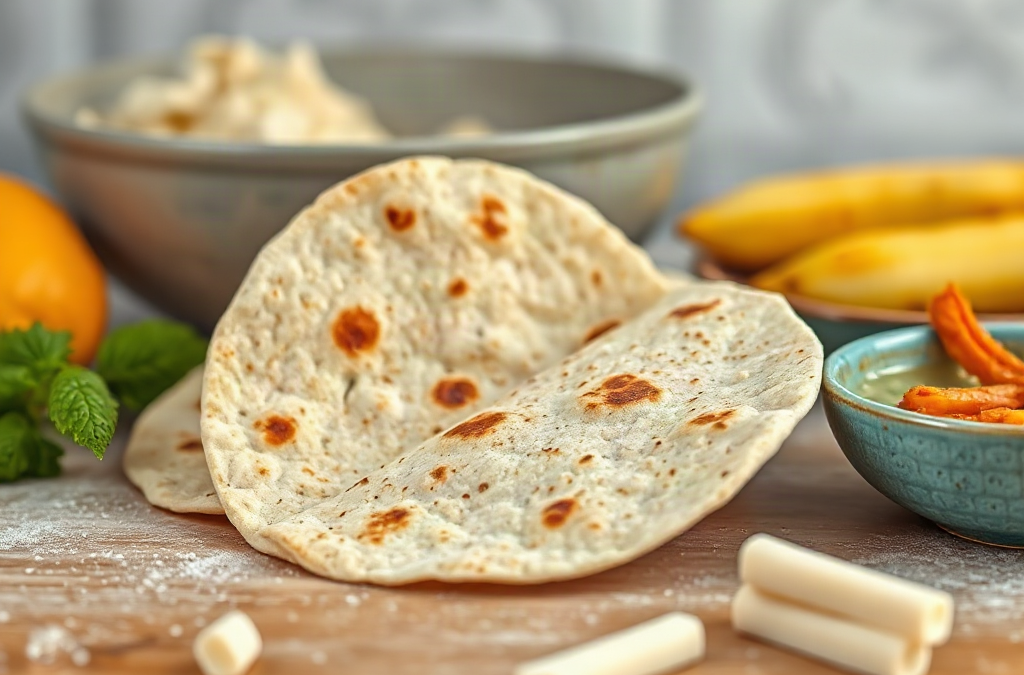
Organic tortillas with better fiber and ingredients usually combine a certified-organic grain or legume base with meaningful fiber, limited added sodium, and a short list of recognizable functional ingredients. Compare fiber per serving, serving size, whole-grain placement, oil type, and additives rather than trusting front-label phrases such as multigrain or spinach. A tortilla made primarily from whole corn, whole wheat, or beans will generally offer more intact grain or legume material than one based on refined flour with isolated fiber added. The best choice still depends on texture, allergies, meal size, budget, and whether the tortilla stays flexible without unnecessary sweeteners or hydrogenated oils.
What Makes an Organic Tortilla a Better Fiber Choice?
Fiber quality begins with the tortilla’s main ingredient, not the number printed on the front of the package. Whole corn, whole-wheat flour, and legume flours retain more of the original plant structure than refined flour. A product can still report a respectable fiber amount after manufacturers add isolated ingredients such as cellulose, oat fiber, or resistant starch, but that does not make it nutritionally identical to a tortilla built around an intact whole grain or legume.

The distinction matters because whole-food ingredients provide more than fiber alone. Whole grains retain the bran and germ, while bean or chickpea flour contributes plant protein and naturally occurring micronutrients alongside fiber. Isolated fiber may still be useful, particularly for someone trying to raise fiber intake without changing meal volume, but it should not automatically outrank a simpler whole-grain formula. Some concentrated fibers may also cause bloating or digestive discomfort when a person increases intake quickly.
Check the serving size before comparing products. One label may define a serving as one large wrap, while another uses two small corn tortillas. Comparing only the listed fiber grams can therefore produce the wrong conclusion. Look at fiber relative to the number and size of tortillas you will actually eat. A large wrap with five grams of fiber is not necessarily a more concentrated source than two smaller tortillas providing four grams with fewer calories and less sodium.
Organic status answers a separate question. A certified-organic tortilla must meet applicable organic production and handling requirements, but the claim does not guarantee that the product is whole grain, high in fiber, low in sodium, or minimally processed. An organic refined-flour tortilla can still contain little fiber, while a nonorganic whole-grain option may contain more. Buyers who value both priorities need to verify the organic claim and the nutrition profile independently.
A practical benchmark is to compare several packages on the same shelf rather than treating one fiber number as universally ideal. Favor a whole grain or legume near the beginning of the ingredient list, then confirm that the fiber amount is meaningful for the serving you plan to use. If the package emphasizes vegetables, seeds, or ancient grains, verify that those ingredients appear prominently rather than near the end in token quantities.
Five Label Tests for Comparing Tortillas
A reliable tortilla comparison uses the ingredient list and Nutrition Facts panel together. Neither tells the full story alone: the panel quantifies fiber and sodium, while the ingredient list reveals whether those values come from whole grains, legumes, concentrated fibers, or a long collection of additives.
- Identify the first substantial ingredient. Look for whole corn, whole-wheat flour, sprouted whole wheat, or a clearly named bean flour. Terms such as wheat flour or enriched flour generally describe refined flour unless the word “whole” is present.
- Normalize the serving. Compare equal numbers of similarly sized tortillas, or calculate what your actual meal would provide. Diameter alone can mislead because thickness and weight vary.
- Trace the fiber source. Naturally fiber-rich grains and legumes offer a different ingredient profile from refined flour supplemented with cellulose, inulin, or resistant starch. Added fibers are not automatically undesirable, but they should be recognized rather than mistaken for whole-grain content.
- Review sodium and fats. Tortillas can contribute substantial sodium when paired with cheese, salsa, deli meat, or seasoned beans. Check for partially hydrogenated oil and compare the types and quantities of fats used.
- Question decorative claims. Green color, visible seeds, “multigrain,” or a rustic appearance does not establish high fiber. The quantified serving information and ingredient order carry more decision value.
Consider two hypothetical wraps of similar weight. The first lists organic enriched wheat flour followed by water, oil, cellulose, and seasonings. The second begins with organic whole-wheat flour and has a slightly shorter list but one gram less fiber. The first may suit someone specifically seeking a high-fiber wrap, while the second offers a greater proportion of whole grain. The stronger choice depends on whether the priority is the highest listed fiber amount, a whole-food base, digestive tolerance, or ingredient simplicity.
Ingredient length is useful only when interpreted carefully. Tortillas require ingredients that control texture, acidity, shelf life, and flexibility. Lime in corn tortillas, for example, has a traditional processing role, while gums or emulsifiers may keep a packaged wrap from cracking. A long name is not proof of harm, just as a short list is not proof of nutritional strength. Focus first on the base grain, serving-adjusted fiber, sodium, and fats; evaluate minor functional ingredients after those larger factors.
The comparison is working when the chosen tortilla delivers the intended fiber without overwhelming the meal’s sodium allowance, breaking during normal use, or causing digestive discomfort. It is failing when front-label claims repeatedly override the actual serving information or when a high-fiber product makes meals unpleasant enough that it goes uneaten.
Which Tortilla Base Fits Your Meals?
Different tortilla bases solve different meal problems, so no single variety is best for every kitchen. Corn tortillas are often smaller and work well for tacos, tostadas, and enchiladas. Whole-wheat wraps tend to be larger and more flexible for packed lunches. Bean- or chickpea-based tortillas can add fiber and protein, although their flavor, price, and handling may differ from conventional versions.
| Tortilla Base | Useful Strength | What to Check | Common Tradeoff |
|---|---|---|---|
| Whole corn | Simple base for tacos and smaller portions | Whole-corn wording, serving count, and sodium | May crack when cold or dry |
| Whole wheat | Flexible format with whole-grain potential | “Whole wheat” as the leading flour | Large wraps can increase total sodium and calories |
| Bean or chickpea | Legume-based fiber and plant protein | Actual legume placement and added starches | Distinct flavor, texture, or higher price |
| Refined flour with added fiber | Soft texture with a higher stated fiber value | Type of added fiber and digestive tolerance | Less whole-grain material despite the fiber claim |
Meal context can change the decision. Two small corn tortillas filled with black beans, cabbage, avocado, and salsa may provide a fiber-rich plate even if the tortillas are not the highest-fiber product available. A large whole-wheat wrap filled mainly with cheese and processed meat may carry a stronger grain profile but produce a meal with less total plant variety and more sodium. Judge the tortilla as one component rather than expecting it to determine the quality of the entire meal.
Dietary constraints narrow the field. Corn and certified gluten-free legume tortillas may suit people avoiding gluten, but an organic claim does not mean gluten-free, and shared-equipment statements may matter for people with celiac disease or medically necessary restrictions. Wheat tortillas are unsuitable for a wheat allergy regardless of fiber content. Anyone managing a digestive condition may need to assess concentrated fibers, gums, and large legume servings individually rather than assuming that more fiber is always better.
For everyday use, select the format that matches the filling and portion. Small tortillas make sense when building two or three varied tacos; a sturdy wrap may be more practical for a portable lunch. If a tortilla tears, tastes strongly of an unwanted ingredient, or requires doubling to hold food, its attractive label may not translate into a useful purchase. A workable product should support the meal while supplying fiber in a form the person can comfortably and consistently eat.
How Do Texture, Storage, and Cost Affect the Choice?
Texture, shelf life, and price often determine whether a nutritionally appealing tortilla becomes a repeat purchase. Whole-grain and legume formulas can absorb water differently from refined-flour products, which may make them firmer, more fragile, or less elastic. Manufacturers often use oils, gums, or emulsifiers to manage those qualities. Rejecting every functional ingredient can leave shoppers with a tortilla that meets an idealized label standard but performs poorly at the table.
Heating technique can correct common texture problems. Corn tortillas often become more flexible after brief warming in a dry skillet or between lightly dampened towels. Refrigerated whole-grain wraps may also need a short warm-up before rolling. If the package repeatedly cracks even when handled according to its directions, another formula or a smaller filling may be more practical. Excess moisture creates the opposite problem: tortillas can become gummy or tear when filled with undrained beans, watery salsa, or hot ingredients that release steam.
Storage instructions deserve attention because organic products are not necessarily preservative-free, and preservative-free products may spoil sooner. Follow the package direction for refrigeration after opening and inspect for visible mold, unusual odor, or unexpected moisture. Do not rely only on flexibility as a freshness test. Freezing extra tortillas in separated portions can reduce waste, especially when a preferred whole-grain or legume product is sold in a large package.
Cost should be evaluated per usable serving, not merely per package. A premium wrap that is large enough to serve as an entire lunch may compare reasonably with a cheaper package requiring two wraps. Conversely, small organic tortillas can become expensive if several are needed for each person. Store brands with certified-organic whole corn or whole wheat may offer a simpler formula at a lower price than specialty products built around seeds, vegetable powders, or novel fibers.
A sensible buying sequence is to prioritize the base ingredient and serving-adjusted fiber, screen sodium and unsuitable allergens, then decide how much ingredient simplicity is worth within the household budget. Buy one package before stocking up. Test it with the meals you actually prepare, note whether it stays flexible, and observe digestive tolerance when it contains concentrated fiber. The best signal of success is not the most impressive label; it is a tortilla that contributes useful fiber, works reliably, and is eaten before it spoils.
Conclusion
A strong tortilla choice balances nutritional value with how the product functions in a real meal. Begin with the leading grain or legume, compare fiber using equivalent servings, and check sodium, fats, allergens, and the source of any added fiber. Treat organic certification as a meaningful production attribute rather than proof of whole-grain content or an ideal nutrition profile.
Choose a size and base that fit the intended food: whole corn for smaller tacos, whole wheat for flexible wraps, or legumes when their flavor and texture suit the filling. Then test one package for flexibility, storage life, digestive comfort, and cost per usable serving. A tortilla earns a regular place in the kitchen when its ingredients meet your priorities and it reliably holds the meals you actually make.
Frequently Asked Questions
Does organic mean a tortilla is high in fiber?
No. Organic certification addresses production and handling standards, not fiber content. Check the Nutrition Facts panel and look for whole grains or legumes near the start of the ingredient list.
Are corn tortillas higher in fiber than flour tortillas?
Not automatically. Fiber varies by recipe, tortilla size, and serving count. Compare similarly sized servings and verify whether a flour tortilla uses whole-wheat or refined flour.
Is added fiber in tortillas a bad ingredient?
Added fiber is not inherently bad and can raise fiber intake, but it does not make refined flour equivalent to a whole grain. Increase concentrated fibers gradually if they cause gas or bloating.
What ingredients help tortillas stay flexible?
Oil, glycerin, gums, and emulsifiers may help retain moisture or flexibility. Their presence is not automatically a defect; consider whether the overall formula meets your priorities and performs well.
How can I keep whole-grain tortillas from cracking?
Warm them briefly before folding, avoid overfilling, and follow package storage directions. If they remain brittle after warming, try a smaller tortilla, a different formula, or a fresher package.