
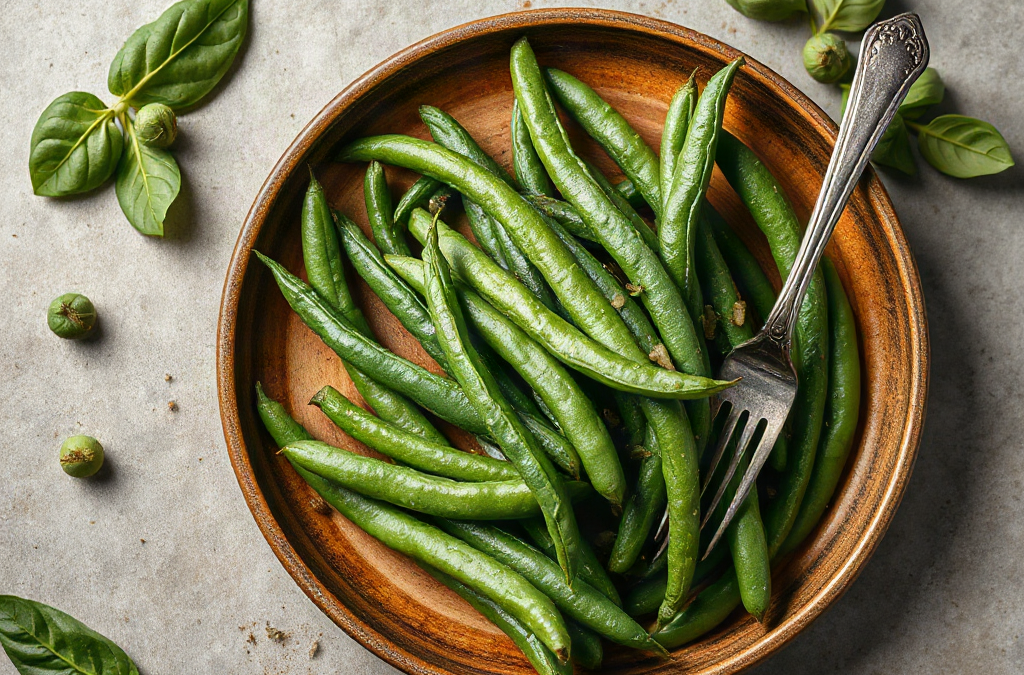
Green beans contribute fiber and make balanced plates easier to build when they are paired with a substantial protein food, a satisfying carbohydrate, and a modest source of fat. Their fiber and water add volume, but green beans alone do not supply enough protein, energy, or fat for a complete meal. Use roughly one-quarter to one-half of the plate for green beans or combine them with other vegetables, adjusting the amount to appetite and tolerance. Choose fresh, frozen, or no-salt-added canned beans, and avoid overcooking or heavy sauces that can compromise texture or overshadow the rest of the plate.
How Do Green Beans Contribute Fiber?
Green beans are a non-starchy vegetable that contributes dietary fiber along with water, folate, vitamin C, vitamin K, and plant compounds. Their fiber is distributed through the pod rather than concentrated in a tough peel or large seed. That makes cooked green beans relatively easy to incorporate into ordinary meals while still adding structure and volume.

Fiber is not a single substance with one effect. Different plant fibers interact with water, digestion, and intestinal microbes in different ways. Green beans provide a mixture rather than an unusually concentrated dose, so they are best viewed as one useful contributor within a varied diet. Lentils, chickpeas, oats, berries, pears, nuts, seeds, and other vegetables can supply additional fiber with different textures and nutrient profiles.
A common mistake is treating green beans as interchangeable with mature dried beans. Although both belong to the legume family, their roles on the plate differ. Green beans are harvested with tender pods and immature seeds, so their nutrient profile resembles that of a non-starchy vegetable. Kidney beans, black beans, and chickpeas contain substantially more starch and protein and can serve as a main protein-carbohydrate component. A plate of green beans therefore still needs a meaningful protein source.
Preparation affects how the vegetable feels and functions in a meal. Tender-crisp beans require more chewing than beans cooked until very soft, which may make a meal feel more substantial. Softer beans can be more comfortable for someone who dislikes fibrous textures or is gradually increasing fiber. Neither texture is inherently superior; tolerance, preference, and the rest of the meal should guide the choice.
Increasing fiber abruptly may cause bloating or discomfort for some people, especially when multiple high-fiber foods are added at once. A practical approach is to increase portions gradually, drink fluids according to personal needs, and observe digestive response. People following a medically prescribed low-fiber diet or managing digestive symptoms should use guidance from a qualified clinician rather than assuming that more fiber is always appropriate.
How Should Green Beans Fit on a Balanced Plate?
Green beans work best as the vegetable component of a plate, not as the entire foundation of the meal. A useful starting arrangement gives vegetables a generous share of the plate, then reserves space for a protein food and a carbohydrate that matches the person’s appetite, activity, and dietary needs. Green beans may occupy most of the vegetable portion or share it with carrots, tomatoes, leafy greens, or another contrasting vegetable.
Balance comes from complementary roles. Green beans offer volume and fiber but relatively little energy. Protein foods supply amino acids and often improve staying power, while grains, potatoes, corn, or legumes add carbohydrate and energy. Fat from olive oil, tahini, avocado, nuts, seeds, dairy, eggs, fish, or another ingredient can contribute flavor and satisfaction. Exact proportions are flexible rather than a rule that every person must follow.
| Meal Style | Green Bean Component | Protein Component | Carbohydrate or Energy Component |
|---|---|---|---|
| Simple dinner | Roasted green beans | Baked salmon or tofu | Brown rice |
| Plant-based plate | Steamed green beans with lemon | Lentils | Roasted sweet potato |
| Quick lunch | Chilled green bean and tomato salad | Eggs or white beans | Whole-grain bread |
| Higher-energy meal | Sautéed green beans | Chicken, tempeh, or fish | Quinoa plus an olive-oil dressing |
Portion needs differ. Someone with a small appetite might begin with about half a cup of cooked green beans, while a larger appetite may favor a cup or more alongside the other components. The better test is whether the serving leaves enough room for adequate protein and energy. A huge mound of plain vegetables can look virtuous yet produce a meal that is unsatisfying, especially for active people or anyone with increased energy needs.
Use a short plate check before serving:
- Vegetable: Are the green beans present in an enjoyable, realistic amount?
- Protein: Is there a clearly identifiable protein food?
- Energy: Does the meal include a grain, potato, legume, bread, or another suitable source?
- Flavor: Is there enough seasoning or fat to make the plate appealing without burying the beans?
A sign the arrangement is working is that the meal is enjoyable and reasonably satisfying until the next planned eating occasion. Persistent hunger shortly afterward may indicate too little protein, fat, or total food—not a need to add more green beans. Conversely, repeatedly leaving vegetables untouched suggests that the portion, seasoning, or texture needs adjustment.
Are Fresh, Frozen, or Canned Green Beans Better?
Fresh, frozen, and canned green beans can all support a fiber-conscious plate, and the best choice is usually the one that fits the cooking time, budget, storage space, and preferred texture. Nutritional differences exist, but they rarely justify buying fresh beans that will spoil or rejecting a convenient form that makes vegetables easier to serve consistently.
Fresh beans offer a crisp texture and work well for roasting, steaming, blanching, or quick sautéing. Look for firm pods without extensive browning or soft, wet spots. Freshness matters most when the desired result is tender-crisp. Their limitation is a relatively short refrigerator life, making them less practical when shopping is infrequent or meal plans change.
Frozen green beans are washed and prepared before freezing, reducing trimming and waste. They can move directly from the freezer to a hot pan, steamer, soup, or casserole. Thawing them in a bowl before cooking often releases water and encourages a soft result. For browning, place frozen beans in a sufficiently hot pan and allow moisture to evaporate before adding wet sauces. Frozen beans may not match freshly blanched beans for snap, but they are dependable for fast meals.
Canned green beans provide the softest texture and require only reheating. Sodium varies by product, so compare labels when sodium intake is a concern. No-salt-added options offer more control, while draining and rinsing regular canned beans can remove some surface brine. Canned beans are particularly useful when refrigeration, time, or cooking equipment is limited.
Organic certification addresses production methods; it does not automatically mean a product contains more fiber or fits every meal better. Compare condition, ingredient lists, price, and expected use. A plain conventional frozen bag may be more useful than organic fresh beans that deteriorate before cooking. Similarly, beans packaged with rich sauces can still fit a plate, but added sodium, sugar, or fat should be considered alongside the rest of the meal rather than treated as an invisible detail.
The practical priority is dependable use. Keep frozen beans for unplanned dinners, buy fresh beans when texture is central to the dish, and store canned beans for shelf-stable backup. This combination often reduces waste while preserving enough choice for different meals.
How Should Green Beans Be Cooked for Texture and Flavor?
Green beans need enough heat to become tender and flavorful, but extended cooking can dull their color and collapse their texture. The right method depends on whether the meal calls for crisp contrast, browned edges, or a softer vegetable that absorbs surrounding flavors. Timing should be judged by tasting rather than relying on a rigid minute count because pod thickness, freshness, quantity, and equipment vary.
For a bright, tender-crisp result, steam or boil the beans briefly, then test one. It should bend and be easy to bite without feeling raw or squeaky. Draining promptly limits carryover cooking. A cold-water rinse can stop cooking when the beans are intended for a salad, although it also cools them and may slightly dilute surface flavor. Dress chilled beans after draining well so vinaigrette adheres instead of becoming watery.
Roasting and sautéing produce deeper flavor through browning. Dry the beans first, spread them without severe crowding, and use enough oil to coat them lightly. An overloaded pan traps steam, leaving some beans limp while others remain underdone. Garlic can burn before thick beans soften, so it may be better added later in cooking. Lemon zest, toasted almonds, sesame seeds, herbs, black pepper, mustard, or a spoonful of yogurt sauce can add contrast without requiring a heavy coating.
Softer cooking is appropriate for braises, soups, and dishes in which green beans are meant to absorb tomato, onion, or spice flavors. Soft does not necessarily mean poorly prepared. The mistake is allowing a long cooking method to happen accidentally when the desired result was crisp. Decide on the intended texture before choosing the pan and timing.
Seasoning should complement the full plate. Soy sauce or salty cheese may taste balanced with plain rice and unseasoned protein but become excessive beside cured meat or a salty packaged entrée. Rich casseroles can make green beans appealing, yet they change the vegetable’s role by adding cream, cheese, fried toppings, or concentrated sauces. That is a meal choice rather than a reason to dismiss the dish; simply account for those ingredients and avoid presenting the casserole as equivalent to plainly cooked beans.
Evaluate success at the table. Beans that are consistently left behind may need smaller portions, stronger seasoning, or a different texture. Beans that dominate while the protein or grain seems inadequate indicate a plate-design problem. The most sustainable preparation is one people will actually eat while leaving room for the other foods needed to complete the meal.
Conclusion
Green beans earn their place on a balanced plate by adding fiber, water, color, and vegetable volume without dictating the entire meal. Prioritize the plate around complementary roles: pair the beans with an identifiable protein food, include enough carbohydrate and fat for the eater’s needs, and choose a portion that is satisfying rather than performative. Fresh beans offer crispness, frozen beans reduce preparation and waste, and canned beans provide reliable convenience.
The next useful step is to select one preparation that fits the planned meal. Steam beans for a clean side, roast them when deeper flavor is needed, or use a well-drained canned option when time is tight. If the beans are repeatedly left uneaten or the meal fails to satisfy, change the texture, seasoning, portion, or supporting foods instead of assuming the vegetable itself is the problem.
Frequently Asked Questions
Are green beans considered a vegetable or a legume?
Botanically, green beans are legumes, but their immature pods have a nutrient profile and culinary role closer to a non-starchy vegetable than to dried beans or lentils.
How much green beans should I put on a plate?
About half a cup to one cup cooked is a practical starting range, but appetite and the rest of the meal matter more than a fixed serving. Leave room for protein and an appropriate energy source.
Do canned green beans still contain fiber?
Yes. Canning softens the texture but does not turn green beans into a fiber-free food. Check sodium on the label, and drain or rinse them when appropriate.
Can green beans replace beans such as chickpeas or black beans?
Not nutritionally. Green beans function mainly as a non-starchy vegetable, while mature legumes provide considerably more protein, starch, and energy.
Is it better to eat green beans raw or cooked?
Cooking usually improves tenderness and palatability. Light steaming, blanching, roasting, or sautéing preserves structure, while longer cooking suits soups and braised dishes.