
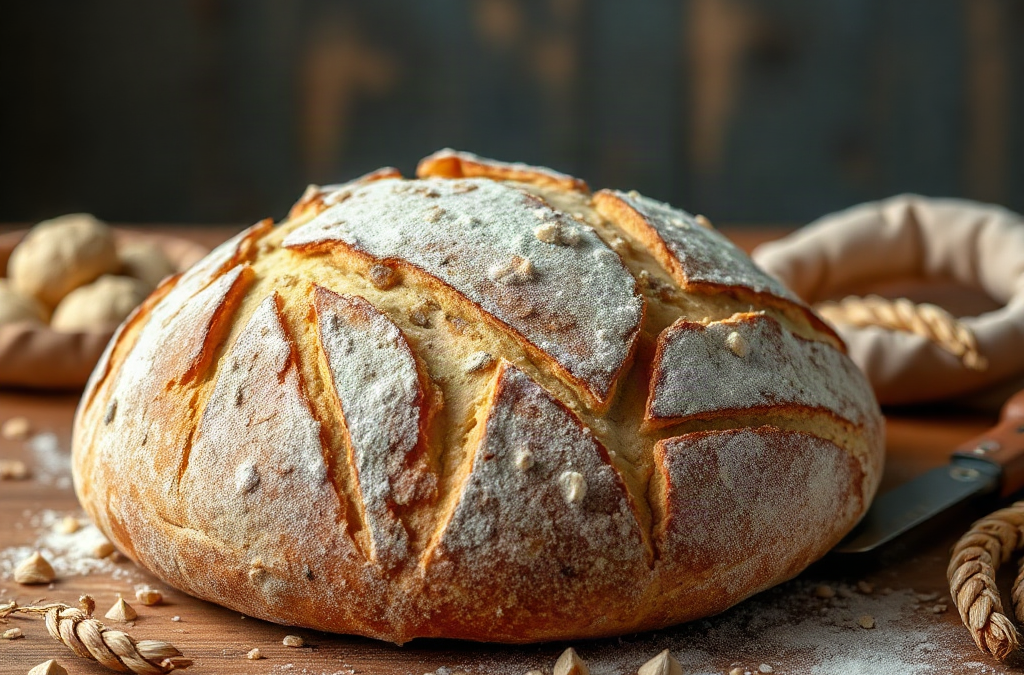
Organic sourdough ingredients and fermentation claims should be judged separately: organic flour describes how grain was produced, while fermentation depends on wild yeast, lactic-acid bacteria, hydration, temperature, and time. A starter may change acidity, flavor, and texture, but fermentation does not automatically remove gluten, make bread suitable for celiac disease, or guarantee superior nutrition. Choose organic whole-grain or refined flour according to flavor, dough strength, and tolerance, then monitor starter activity and dough expansion rather than relying on the clock alone. Treat claims about easier digestion or improved nutrient absorption as context-dependent, because recipe formulation, fermentation length, baking, and individual health needs all affect the result.
What Organic Means in a Sourdough Formula
Organic status applies to the agricultural production and handling standards behind an ingredient; it does not describe the activity of the sourdough culture. Organic wheat flour, rye flour, whole-wheat flour, water, salt, and added seeds may all be used in one loaf, but each ingredient still has a separate role in the dough. The organic label should therefore be read as a sourcing claim, not as proof that the bread was fermented longer, tasted better, or offered a particular health outcome.
Flour choice has a more immediate effect on dough behavior than the word organic. Organic whole-wheat flour contains more of the grain’s bran and germ than refined flour, so it typically absorbs more water and can produce a denser, more aromatic loaf. Organic white bread flour generally gives stronger gluten development and a lighter crumb. Rye flour behaves differently again: its structure depends less on an elastic gluten network and more on pentosans and starch. A baker replacing half the white flour with rye may need to adjust hydration and expectations about rise.

Consider two labels side by side. A bag marked organic whole-wheat flour tells you about production standards and the portion of the grain retained. A bag marked “naturally fermented” describes a process claim, not an agricultural one. Neither statement alone establishes how much fermentation occurred or whether the final bread suits a person avoiding gluten. Readers comparing Organic sourdough ingredients and fermentation claims should keep sourcing, formulation, and processing as separate questions.
Ingredient simplicity can be useful, but it is not a guarantee of quality. A sourdough loaf made from organic flour, water, salt, and starter may still be poorly fermented, excessively salty, underbaked, or contaminated through careless handling. Conversely, a non-organic ingredient does not automatically make a loaf nutritionally poor. Prioritize the label information that answers your actual concern: grain type, allergen presence, added sweeteners, salt, whole-grain content, and storage instructions.
How Fermentation Changes Dough
Sourdough fermentation is driven mainly by yeasts and lactic-acid bacteria living in the starter. Yeasts produce carbon dioxide that expands the dough, while bacteria produce organic acids and other compounds that influence flavor and acidity. Enzymes in the flour also act during hydration and fermentation, breaking down some starches and altering the dough’s handling. The result depends on temperature, starter maturity, hydration, flour type, inoculation level, and fermentation duration.
Time alone is a weak measure. A dough kept in a cool kitchen may develop slowly, while the same formula in a warm room may become slack and over-acidified sooner. A practical baker watches for signs such as a visibly expanded dough, bubbles along the container, a smoother but aerated surface, and enough strength to hold its shape. A sharp solvent-like smell, collapse, excessive stickiness, or a dense finished crumb can indicate that the process has moved past its useful point, although one sign should not be interpreted in isolation.
Bulk fermentation and final proof are different stages. During bulk fermentation, the dough develops gas and strength in the mixing container; folds may redistribute temperature and strengthen the developing network. During final proof, the shaped loaf expands before baking. A loaf that receives too little time may have a tight crumb and split unpredictably in the oven. A loaf left too long may spread, lose tension, and bake with a gummy or flat interior. Refrigeration slows activity but does not stop it completely, so an overnight schedule still requires judgment.
For example, a whole-grain dough can appear active because bran creates visible texture, yet its gluten network may not support a dramatic rise. A refined-flour dough may rise more visibly while developing less pronounced grain flavor. Comparing volume, dough strength, aroma, and the baked crumb is more informative than treating a fixed twelve-hour schedule as universally correct. A useful process log records flour blend, water amount, room temperature, starter quantity, bulk duration, and the final result.
Evaluating Digestion and Nutrition Claims
Fermentation may alter the bread’s acidity, flavor, texture, and some carbohydrate and mineral-related properties, but those changes should not be turned into universal medical promises. Statements that sourdough is automatically easier to digest, lowers blood sugar, or makes wheat harmless depend on the recipe, fermentation conditions, serving size, individual response, and the comparison food. Research findings may involve specific formulas and controlled conditions that do not translate directly to every home-baked loaf.
Phytate is one reason fermentation receives nutritional attention. Phytate can bind some minerals in foods, and microbial activity plus flour enzymes may reduce part of it under suitable conditions. The degree of change varies with acidity, time, temperature, flour composition, and processing. That does not mean a sourdough loaf supplies unlimited mineral availability or replaces a varied eating pattern. Whole-grain flour still contributes fiber and grain compounds, but it can also make bread heavier and more challenging for some people to tolerate.
Gluten claims require particular care. Fermentation can break down some protein components, but ordinary sourdough bread remains a wheat product unless it is deliberately formulated from gluten-free grains and prepared under controls appropriate to the intended consumer. People with celiac disease should not assume that long fermentation makes conventional wheat bread safe. Those with wheat allergy, non-celiac gluten sensitivity, or digestive symptoms also need individualized advice rather than a blanket promise.
A sensible comparison asks what the loaf replaces. A slice of long-fermented whole-grain sourdough may differ from highly refined white bread in fiber, texture, and satiety, but a thick slice with butter, cheese, or sweet toppings changes the overall nutritional picture. Portion size and the rest of the meal matter. For a practical meal, pair bread with protein, vegetables, legumes, eggs, or another nutrient-dense topping instead of evaluating fermentation as a stand-alone treatment. Avoid claims that use “organic” and “fermented” together as if they prove the same benefit.
Choosing Ingredients and Controlling Timing
Start with the outcome you want from the loaf. Choose organic white bread flour when extensibility, volume, and a mild crumb are priorities; include organic whole-wheat flour when grain flavor and fiber are priorities; use rye for acidity and complexity while accepting a different structure. A blend is often more manageable than switching immediately to an entirely whole-grain formula. Water quality, salt percentage, and starter maturity also affect the result, even though they receive less attention on packaging.
A reliable workflow uses observation rather than a rigid timetable. Feed the starter and use it when it has expanded, shows bubbles throughout, and has a clean pleasantly acidic aroma rather than a dormant or sharply solvent-like smell. Mix the dough, allow an initial rest if the formula uses one, then develop strength through kneading or folds. During bulk fermentation, mark the starting level on the container. Shaping should follow meaningful aeration and elasticity, not simply the arrival of a preset hour.
Use a compact check before baking:
- Ingredients: confirm flour type, allergen information, salt, and any sweeteners or fats.
- Starter: check recent feeding, rise, aroma, and visible activity.
- Dough: note hydration, room temperature, expansion, bubbles, and strength.
- Finished loaf: assess internal doneness, crumb texture, acidity, and storage.
A beginner may prefer mostly refined flour, moderate hydration, and a shorter, easier-to-read fermentation. An experienced baker may choose high whole-grain content, a stiff or liquid starter, and a cold proof for flavor control. Neither approach is inherently more nutritious or authentic. The tradeoff is control versus complexity: higher hydration and more whole grain can bring flavor and fiber but make timing and shaping less forgiving. If the loaf is repeatedly dense, first check starter activity and fermentation temperature before adding more yeast, salt, or flour at random.
Safety, Labeling, and Practical Limits
Fermentation does not make every handling practice safe. Use clean containers and utensils, store flour appropriately, and discard a starter with visible mold or unusual colored growth rather than scraping the surface and continuing. A sour smell is normal; fuzzy growth, strongly putrid odors, or unexplained discoloration are reasons to stop. Baked bread should cool before sealed storage so trapped steam does not encourage a wet surface and spoilage.
Packaged sourdough products deserve the same scrutiny as homemade loaves. “Sourdough flavor” may describe an added flavoring or acid rather than a long natural fermentation. A product can contain commercial yeast alongside a sourdough culture, and that is not automatically a defect; it simply makes the process claim different from a loaf leavened only by a mature starter. Read the ingredient list, allergen statement, whole-grain wording, and nutrition panel instead of relying on front-label language.
Organic certification and fermentation terminology also have different limits. Certification may address agricultural inputs and handling, while fermentation wording may be used broadly across products. When a package claims improved digestion, reduced gluten, or superior nutrient absorption, look for precise wording and supporting information. A vague claim should not outweigh clear facts about ingredients, portion size, storage, and whether the product fits a medical dietary requirement.
Readers managing celiac disease, a diagnosed allergy, persistent digestive symptoms, or another nutrition-related condition should use qualified medical or dietetic advice. Sourdough can be part of an ordinary eating pattern, but it is not a treatment. The most defensible decision is usually the one that matches the person’s dietary restriction, preferred grain profile, budget, baking skill, and tolerance for variable fermentation. Further discussion of ingredient labels and fermentation claims should keep those limits visible rather than promising a single ideal loaf.
For current guidance, consult official organic-labeling information from the USDA, food-safety guidance from government agencies, and peer-reviewed research or university extension publications covering sourdough microbiology, whole grains, gluten, and food handling. These sources are more useful than package claims when a decision involves allergy safety or a medical diet.
Frequently Asked Questions
Does organic flour make sourdough more nutritious?
Organic status does not by itself establish a higher nutrient content. Whole-grain content, flour type, recipe, and portion size usually matter more for the loaf’s nutrition.
Does long fermentation remove gluten?
No. Ordinary wheat sourdough remains unsuitable to assume safe for celiac disease, even after extended fermentation.
How can I tell whether dough is fully fermented?
Look for appropriate expansion, bubbles, elasticity, and dough strength, while considering temperature and flour type. A clock alone cannot determine readiness.
Is sourdough easier to digest than standard bread?
Some people may tolerate a particular fermented loaf better, but the effect depends on the formula, fermentation, serving size, and individual sensitivity.
What should I check on a packaged organic sourdough label?
Check the flour type, whole-grain amount, allergen statement, added ingredients, salt, storage instructions, and whether “sourdough” reflects fermentation or only flavor.
Conclusion
Organic sourcing and sourdough fermentation answer different questions. Choose organic flour when its production standards align with your priorities, then select whole-grain, refined, or rye flour according to the crumb, flavor, and handling you want. Judge fermentation by starter activity, dough expansion, temperature, and the baked result rather than by a promised number of hours. Treat digestion, mineral availability, and gluten statements as conditional claims, not guarantees. Most importantly, ordinary wheat sourdough should never be presented as safe for celiac disease. Read packaged labels carefully, keep starter and dough handling clean, and adjust one variable at a time so the loaf teaches you what changed.
Huge Discount on the Best Certified Organic Nutrient Dense Supplement!