
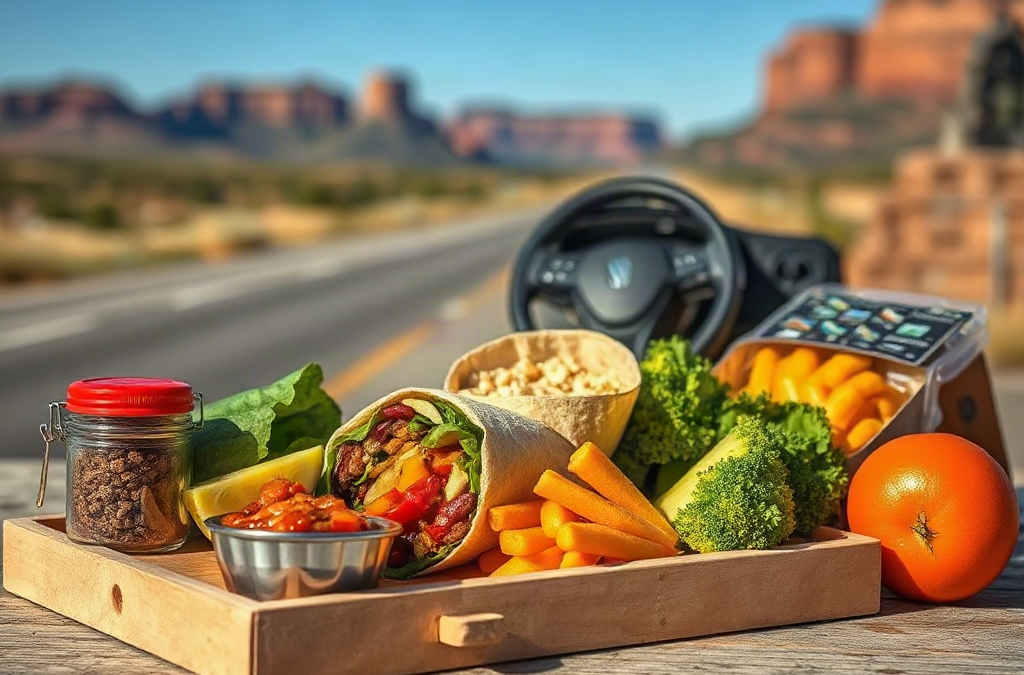
Travel-day organic food options for balanced portable meals work best when they combine a durable carbohydrate, protein, produce, and a safe temperature plan. Pack items such as whole-grain wraps, nut or seed butter, roasted chickpeas, apples, carrots, and a chilled bean-and-grain salad so energy is steadier than with pastries or candy alone. Choose foods that tolerate handling, portion them before leaving, and separate cold ingredients from shelf-stable snacks. Perishable items need an insulated bag and cold packs; an organic label does not make food immune to spoilage. The practical goal is a portable meal that remains appealing, filling, and safe through the actual length and conditions of the trip.
Build a Balanced Travel-Day Food Pattern
A portable meal is more reliable when it includes several food groups rather than one convenient snack category. A practical combination is a carbohydrate for usable energy, a protein source for staying power, produce for fiber and flavor, and a modest source of unsaturated fat. That structure can be assembled without cooking at the destination: an organic whole-grain tortilla with hummus, shredded carrots, spinach, and sliced chicken is one example; a grain bowl with lentils, vegetables, pumpkin seeds, and vinaigrette is another.
Carbohydrate quality matters, but eliminating it often creates a different problem. A traveler who packs only cheese, nuts, or meat may find the food dense and unsatisfying, while a bag of crackers alone may be easy to eat but leave little protein or fiber. Whole-grain bread, oats, brown rice, quinoa, fruit, and beans can provide a more useful base. Protein might come from hard-cooked eggs, unsweetened yogurt, tofu, tempeh, lentils, beans, or a minimally sweetened organic snack bar.

Think in terms of eating occasions rather than one oversized container. A long drive or flight may involve breakfast before departure, a delayed lunch, and an afternoon snack. Dividing food into a main item, a produce portion, and a shelf-stable reserve reduces the temptation to finish everything early. The linked Travel-day organic food options for balanced portable meals can also serve as a planning reference when the itinerary changes.
A common mistake is treating the organic seal as a nutrition guarantee. Organic certification addresses production and handling standards, not whether a product is high in sodium, added sugar, or saturated fat. Compare ingredient lists and Nutrition Facts panels just as you would for conventional food. An organic granola bar may still be mostly sweetener, while a simple package of organic almonds may offer more staying power but little carbohydrate. The best choice depends on what the rest of the travel-day menu supplies.
Choose Organic Foods That Travel Well
Durability should influence food selection as much as nutrition. Foods that bruise, leak, melt, or require utensils often become poor choices after several hours in a backpack or car. Firm fruit such as apples, oranges, and slightly underripe pears generally handles movement better than cut berries. Whole carrots, snap peas, and bell pepper strips are practical produce choices, although cut vegetables still require attention to cleanliness and temperature.
Shelf-stable foods are useful because they remove refrigeration pressure. Organic roasted chickpeas, whole-grain crackers, unsalted nuts, seed packets, dried fruit without added sugar, and single-serve nut butter can fill gaps between meals. Pair dried fruit with nuts or seeds rather than treating it as a complete meal; removing water concentrates its natural sugar and makes portions easy to overeat. A whole-grain tortilla with a sealed nut-butter packet is more complete than either item alone.
Fresh meals can work when their texture matches the journey. A bean-and-quinoa salad with dressing packed separately is less likely to become soggy than a dressed leafy salad. A hummus wrap should be tightly rolled and wrapped to limit leakage, while a yogurt-and-oat cup belongs in a cooler. For air travel, foods may need to pass through screening and may be awkward to eat in a narrow seat, so dry snacks and compact wraps are often more workable than liquids or saucy dishes. Check the carrier and destination rules before relying on a food that may be restricted.
Organic packaging can also create tradeoffs. Individual packets are convenient and hygienic, but they can cost more and generate more waste. Larger packages are economical for a family road trip but may encourage unplanned grazing. Portioning at home into reusable containers offers a better middle ground. Do not pack foods merely because they are labeled organic if they are likely to be rejected once warm, crushed, or difficult to open; a less elaborate item that will actually be eaten can be the more useful option.
Pack Perishable Items Safely
Food safety begins with the time and temperature plan, not with the label on the package. Organic dairy, eggs, cooked grains, meat, poultry, tofu, cut produce, and prepared salads can all spoil if handled carelessly. Use a clean insulated bag with sufficient cold packs, keep it closed as much as possible, and place it where it will not sit in direct sun or a hot vehicle. A separate dry-food pouch prevents frequent cooler opening from warming the perishable compartment.
Prepare chilled foods shortly before departure and cool cooked ingredients promptly rather than leaving a pot of rice, beans, or pasta at room temperature for an extended period. Pack small portions in shallow containers so they chill efficiently. Keep raw ingredients away from ready-to-eat foods during preparation, and wash produce under running water before cutting it. Soap or produce washes are not a substitute for clean hands, clean utensils, and proper refrigeration.
A simple setup might include a refrigerated bean salad, a yogurt cup, and sliced vegetables in the cold bag, with apples, whole-grain crackers, and roasted seeds outside it. If the trip includes a stop at a store, buy chilled replacements near mealtime rather than carrying fragile foods for the entire day. For a short outing, shelf-stable ingredients may be preferable because they reduce both spoilage risk and packing complexity.
The weak assumption to avoid is that a cooler automatically keeps food safe. A small bag opened repeatedly, an underpowered ice pack, or a trunk exposed to heat may not maintain cold conditions. If you cannot confidently keep a perishable item cold, choose a shelf-stable alternative. The U.S. Department of Agriculture and local public-health guidance are useful for checking current food-safety practices, especially when traveling with children, older adults, or anyone more vulnerable to foodborne illness.
Plan Portions, Timing, and Backup Options
Travel-day planning works better when the menu is matched to the itinerary. Before packing, note the departure time, expected delays, access to water, restroom stops, refrigeration, and opportunities to buy food. A commuter train trip may need one compact breakfast and a snack, while an all-day drive may require two meals plus reserves. The linked portable meal planning resource is most useful when adapted to those conditions rather than copied as a fixed menu.
Pack a main meal that can be eaten without a full kitchen, then add one or two backup items. For example, breakfast could be overnight oats in a cold bag with an apple; lunch could be a lentil wrap with vegetables; an emergency snack could be almonds and whole-grain crackers. Water should be planned alongside food. Salty packaged foods may increase thirst, while dry foods are difficult to eat comfortably without a drink.
Portions should reflect appetite and access to the next meal, not an arbitrary rule. A smaller child may need several modest items, and someone with a long gap between stops may need a more substantial combination. Pack components separately when textures matter: keep dressing, salsa, seeds, or crunchy toppings in small sealed containers. This prevents a soggy meal and lets each traveler adjust flavor without bringing multiple complete meals.
Signs the plan is working include food that remains appealing, enough variety to assemble a satisfying serving, and a backup that is available without refrigeration. Signs it is failing include repeated reliance on sweets, food that leaks, excessive thirst from salty snacks, or perishable items being carried without reliable cooling. A useful final check is simple: identify the first meal, the delay food, the drink, and the item you will discard or replace if temperature control is uncertain. The related Travel-day organic food options for balanced portable meals should support that decision rather than add unnecessary complexity.
Frequently Asked Questions
What is a balanced organic travel meal?
Combine a carbohydrate such as whole grains or fruit with protein, produce, and a modest fat source. A hummus wrap with vegetables and fruit is a practical example.
Which organic foods do not need refrigeration?
Whole fruit, nuts, seeds, roasted chickpeas, whole-grain crackers, dried fruit, and unopened nut-butter packets are common shelf-stable choices. Check package directions for exceptions.
How should I carry organic yogurt or cooked grains?
Use an insulated bag with adequate cold packs, keep it closed, and prepare the food shortly before leaving. If reliable chilling is unavailable, choose a shelf-stable substitute.
Are organic snack bars automatically healthy?
No. Organic status does not determine added sugar, sodium, fiber, or protein. Compare the ingredient list and Nutrition Facts panel, then pair a bar with fruit or another suitable food if needed.
What should I pack for unexpected delays?
Keep a separate dry reserve such as apples, roasted legumes, nuts, seed butter, or whole-grain crackers. This backup remains useful when a planned chilled meal cannot be eaten on time.
Conclusion
A successful travel-day food plan is built around durability, balance, and realistic temperature control. Choose a carbohydrate, a protein source, produce, and enough flavor or fat to make the food satisfying, then divide it into a main meal and a delay-ready reserve. Shelf-stable organic foods simplify long or unpredictable trips, while chilled meals offer more variety when an insulated bag and cold packs are dependable. Read labels instead of assuming the organic claim answers every nutrition question, and do not carry perishable foods without a credible cooling plan. Before leaving, check the itinerary, water access, portion sizes, packaging, and backup snack. That short review can prevent both an unbalanced convenience-food detour and the need to eat food that has not been kept safely cold.
Huge Discount on the Best Certified Organic Nutrient Dense Supplement!



