
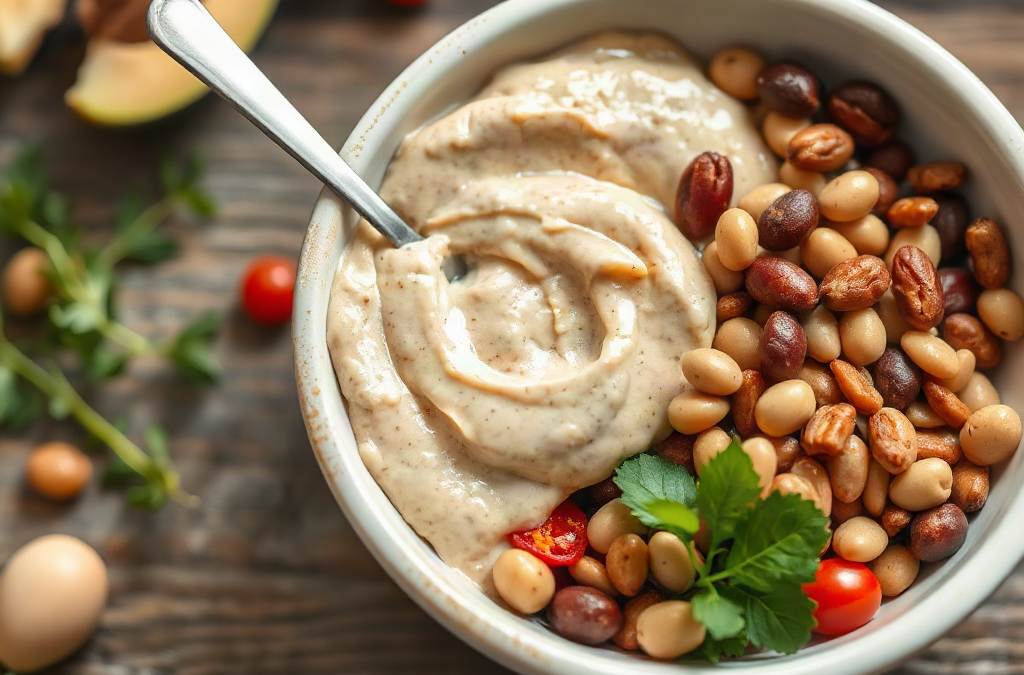
Organic tahini uses in balanced meals include creamy sauces, breakfast toppings, grain bowls, and pairings with beans, lentils, vegetables, or whole grains. Its sesame-seed base contributes unsaturated fat, some protein, and minerals, while its dense texture adds richness without relying on dairy. Thin tahini with water and lemon for a dressing, or combine it with yogurt or hummus when you want a milder sauce. Because tahini is energy-dense and easy to overpour, use a measured spoonful and balance it with produce and a protein-rich food. Check the label for sesame, added salt, sweeteners, and possible cross-contact warnings.
What Tahini Contributes To A Balanced Plate
Tahini is a paste made by grinding sesame seeds, and its practical role in a meal is closer to a concentrated flavor and fat ingredient than to a complete protein food. A spoonful can make plain vegetables, grains, or legumes more satisfying because its creamy texture carries flavor and slows a meal from feeling dry or one-dimensional. Organic certification describes how the sesame was produced and handled under applicable organic standards; it does not automatically mean the jar is lower in calories, sugar, or sodium.
The nutritional value fits best when tahini fills the fat component of a plate that already contains vegetables, a protein source, and a carbohydrate with useful fiber. For example, lentils, roasted carrots, brown rice, and lemon-tahini sauce create a more balanced combination than tahini spread over refined crackers alone. Sesame provides unsaturated fats, plant protein, fiber, and minerals such as calcium, magnesium, and iron, although the exact contribution depends on the portion and product.

Sesame seeds are not a complete substitute for beans, eggs, fish, dairy, tofu, or other substantial protein foods. A common mistake is treating tahini as the main protein in a bowl and then overlooking how little legume or other protein the meal contains. Another is assuming that a generous pour is harmless because the ingredient is plant-based. The paste is compact and energy-dense, so a measured tablespoon is often a sensible starting point, with more added when the rest of the meal is light.
Use the flavor profile to decide where it belongs. Bitter greens, roasted cauliflower, chickpeas, lentils, eggplant, and whole grains can handle tahini’s nutty intensity. Fresh herbs, citrus, garlic, yogurt, or water can soften it. If the finished dish tastes heavy, adding more tahini usually makes the problem worse; acidity, herbs, or crunchy vegetables are more useful corrections. The related Organic tahini uses in balanced meals topic is most useful when it is applied to the plate as a whole rather than to the condiment alone.
Savory Uses For Lunch And Dinner
Tahini sauces are the most flexible savory use because a small amount can connect separate foods. Start with tahini, lemon juice, and water, then adjust the texture gradually. The mixture may thicken when liquid is first added, but continued whisking and a little more water usually produce a pourable dressing. Garlic, cumin, parsley, or a pinch of salt can shift the sauce toward a Mediterranean-style bowl, while grated ginger or soy sauce creates a different direction.
A useful dinner pattern combines a protein-rich base, two kinds of produce, and a modest amount of sauce. Try chickpeas with roasted sweet potato, cabbage, and tahini; lentils with cucumber, tomato, herbs, and bulgur; or baked tofu with broccoli, brown rice, and a sesame-lime dressing. These pairings work because the legumes, tofu, or lentils provide more substantial protein, the produce adds volume and color, and the grain or starchy vegetable supplies carbohydrate for a fuller meal.
Tahini can replace some mayonnaise in a slaw, enrich a bean spread, or serve as a finishing sauce for grilled fish or chicken. That does not make every substitution nutritionally equivalent. Mayonnaise is usually more neutral and smoother, while tahini brings sesame flavor and a different nutrient profile. A yogurt-tahini sauce is lighter and tangier for some palates, but it is not suitable for someone avoiding dairy. Choosing among these options depends on taste, dietary needs, and the other ingredients already present.
For a quick lunch, spread tahini onto whole-grain toast and add mashed white beans, sliced tomato, and greens. For a packed meal, keep the sauce separate so the vegetables remain crisp. If a bowl becomes pasty, use a thinner dressing and add pickled vegetables or fresh lemon. If it feels incomplete, increase the beans or tofu rather than simply adding more sauce. These small adjustments preserve tahini’s useful role without allowing it to dominate the meal.
One frequent failure is pouring undiluted tahini directly over a dry grain bowl. The paste clings to the grains, making the dish seem heavier and using more than intended. Whisking it into a dressing improves distribution, flavor, and portion control. Readers looking for another practical application can use the Organic tahini uses in balanced meals link as an internal route to related serving ideas.
Breakfasts, Snacks, And Sweeter Pairings
Tahini works at breakfast when it adds richness to a meal that still contains fiber and a meaningful protein source. Stir a small spoonful into warm oats with berries and pumpkin seeds, or spread it on whole-grain toast with banana and cinnamon. These combinations taste satisfying because tahini’s savory bitterness balances sweet fruit. Oats, seeds, and fruit also bring texture and fiber that a spoonful of tahini by itself does not provide.
A yogurt bowl can use tahini, chopped apple, walnuts, and unsweetened yogurt, while a dairy-free version can use fortified soy yogurt. The choice matters: some plant-based yogurts contain little protein, so soy yogurt or an added food such as hemp seeds may create a more substantial breakfast than a low-protein coconut product. Tahini adds fat and flavor, but it should not be used to disguise a breakfast that otherwise lacks protein.
For snacks, combine tahini with sliced vegetables, whole-grain pita, or fruit. A dip made from tahini, lemon, and water can accompany carrots and cucumbers; a date-tahini bite may be useful as a small sweet snack, but dates and other dried fruits are concentrated, so the portion can grow quickly. Pairing the paste with fresh produce or a whole-grain food generally gives more eating volume than spreading it thickly on a small sweet item.
Tahini also fits sauces for roasted fruit, homemade granola, or cocoa-based spreads. These uses can be appealing, but honey, maple syrup, chocolate, and dried fruit may turn a modest topping into a dessert-like preparation. The ingredient list tells the truth more reliably than the word “natural” on a package. Choose plain tahini for the greatest flexibility, then control sweetness yourself.
A practical breakfast test is whether the meal keeps its structure after the tahini is removed. If oats still contain fruit, grains, and a protein source, tahini is enhancing the meal. If the recipe depends on a large amount of paste and sweetener for satisfaction, it is functioning more like a calorie-dense spread. The best use is the one that improves taste and texture while leaving room for foods with distinct nutritional roles.
Portions, Labels, Storage, And Common Mistakes
Portion awareness matters because tahini contains little water and packs substantial energy into a small volume. A tablespoon can be enough to dress a serving of vegetables or bind a sandwich filling, especially after it is thinned with water or citrus. People who are monitoring energy intake do not need to avoid tahini, but measuring the first few servings can reveal how quickly an unmeasured drizzle becomes several spoonfuls.
Read the ingredient panel for plain sesame tahini, added oils, salt, sweeteners, and flavorings. A product labeled organic may still contain salt or sugar, and organic status does not remove sesame allergy concerns. Sesame is a major food allergen in the United States, so anyone with a sesame allergy should follow their clinician’s or allergist’s avoidance advice and check both the ingredient statement and any cross-contact warning. Do not treat tahini as safe merely because it is marketed as a health food.
Oil separating at the top is normal in many natural products. Stir the jar thoroughly from the bottom before judging its consistency, then close it tightly. Follow the package storage instructions; refrigeration may slow quality changes after opening, although it can also make the paste firmer. A sour, rancid, or otherwise unusual smell is a reason to discard it rather than cover the flavor with lemon or garlic.
Several assumptions commonly produce disappointing meals:
- “Organic means nutritionally superior.” Certification and nutritional composition are different questions.
- “Tahini counts as the whole protein serving.” Beans, lentils, tofu, eggs, fish, poultry, or dairy may still be needed.
- “More sauce means more balance.” Produce and protein improve the structure; extra paste mainly increases richness and energy.
- “Every tahini tastes the same.” Roasted seeds, bitterness, salt, and texture vary by brand and batch.
When a meal tastes bitter, thin the sauce and add acidity rather than adding sweetener automatically. When it tastes flat, herbs, garlic, or spices may solve the problem with less tahini. When the texture is gritty, choose a smoother product or blend the dressing. These adjustments are more precise than treating the paste as a universal replacement for every creamy ingredient.
A Simple Formula For Building Meals
Use tahini as the connecting element in a meal, not as the meal’s foundation. A reliable formula is one protein-rich food, one fiber-containing carbohydrate, at least one vegetable or fruit, and a measured tahini preparation. The formula can be adapted to different eating patterns: chickpeas with barley and greens, tofu with soba and cabbage, or yogurt with oats and berries. Tahini then contributes flavor and fat while the other foods cover different functions.
Build the plate in this order: choose the main protein, add produce, select a whole-grain or starchy food if wanted, and finish with one to two tablespoons of sauce adjusted with liquid. This order prevents the condiment from taking over the decision. For a single serving, begin with a tablespoon of tahini, one to two teaspoons of lemon juice, and enough water to reach the desired consistency. Exact amounts depend on the dish, the brand, and personal taste.
Consider the meal’s existing fat before adding tahini. Avocado, cheese, nuts, seeds, olive oil, or a creamy dressing may already fill that role. Tahini can still be used, but a smaller amount or a sharper, water-based sauce may be more appropriate. Conversely, a bowl of beans and vegetables with no other rich ingredient may welcome a fuller dressing. This is a better decision rule than labeling one serving size as universally correct.
Signs the approach is working include a sauce that coats food lightly, a plate with visible produce and a clear protein source, and satisfaction that comes from the combined meal rather than the condiment alone. Signs it needs revision include repeated heavy texture, sweetness that requires several added ingredients, or a bowl where tahini has replaced the protein. Adjust the structure first, then season the sauce.
For more meal-specific ideas, Organic tahini uses in balanced meals can guide variations built around the same principle. The goal is not to use tahini at every meal; it is to use it deliberately where its nutty flavor, creamy body, and sesame nutrition complement the rest of the plate.
Frequently Asked Questions
What is the easiest way to use tahini in a balanced meal?
Whisk a measured spoonful with lemon juice and water, then drizzle it over beans or tofu, a whole grain, and several vegetables. This distributes the flavor without requiring a large amount.
Is tahini a good source of protein?
Tahini contains plant protein, but it is usually better treated as a fat-rich condiment than as the primary protein serving. Pair it with legumes, tofu, eggs, dairy, fish, or poultry when building a substantial meal.
Can tahini be used in breakfast foods?
Yes. Add it to oats, yogurt, or whole-grain toast with fruit, but check that the breakfast also contains enough protein and fiber for your needs.
Does organic tahini have fewer calories than regular tahini?
Organic certification does not inherently make tahini lower in calories. Compare nutrition panels and ingredients, since formulations and serving sizes vary by brand.
How should opened tahini be stored?
Follow the jar's storage directions, keep it tightly sealed, and stir separated oil back into the paste. Discard it if the smell or flavor becomes sour, rancid, or otherwise unusual.
Conclusion
Tahini earns its place in balanced meals when it adds flavor and creamy texture to foods that already provide protein, produce, and useful carbohydrate. The most versatile approach is a lemon-and-water sauce over chickpeas, lentils, tofu, vegetables, or whole grains, while breakfast uses work best with oats, fruit, yogurt, or whole-grain toast. Measure the paste before thinning it, inspect labels for salt, sweeteners, added oils, and sesame warnings, and adjust bitterness with acidity or herbs rather than automatically adding more sweetener. Start with one meal this week, build the plate around a substantial protein source, and use tahini as the finishing component. That method preserves its culinary value without confusing a concentrated condiment with a complete meal.
Huge Discount on the Best Certified Organic Nutrient Dense Supplement!



