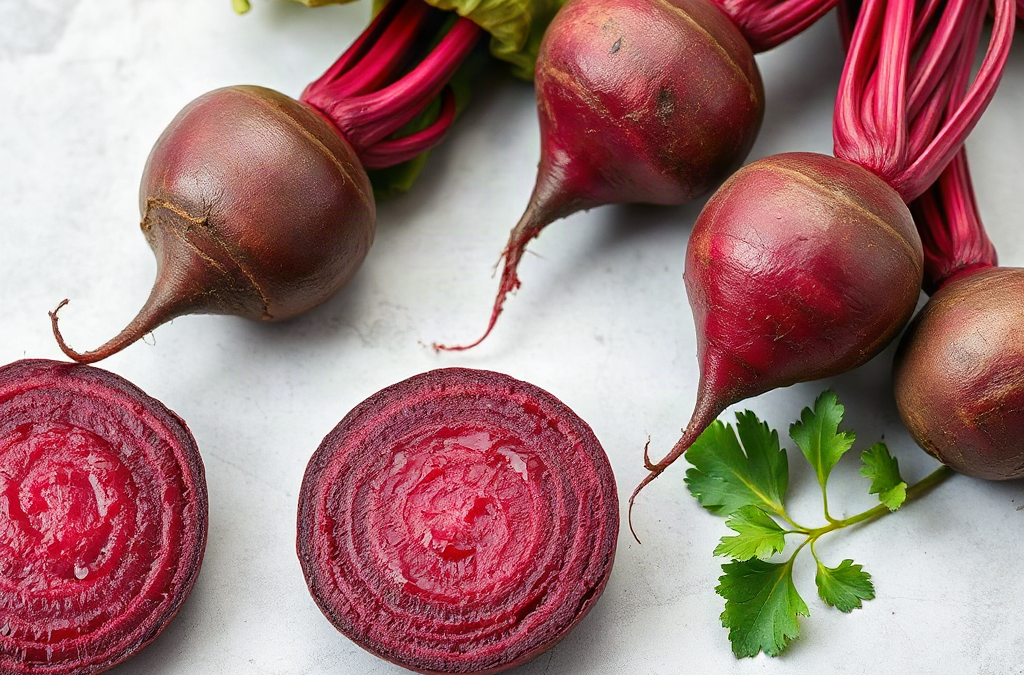
Beetroot nutrition and preparation choices are best balanced by using varied cooking methods: eat some roots raw, steam or roast others, and cook the greens separately. Beetroot supplies folate, fiber, potassium, manganese, betalain pigments, and naturally occurring nitrate, but boiling can move water-soluble nutrients and pigments into discarded cooking water. Roasting concentrates sweetness, steaming limits water contact, and raw preparation preserves texture while retaining heat-sensitive compounds. Choose plain whole beets more often than heavily salted pickled products, retain edible skins when practical, and treat beetroot as one colorful component of a varied diet rather than a treatment for any health condition.
What Nutrients Does Beetroot Provide?
Beetroot is a nutrient-dense vegetable rather than an unusually concentrated source of every vitamin or mineral. The root contributes dietary fiber, folate, potassium, manganese, vitamin C, and small amounts of several other micronutrients. Its deep red or purple color comes primarily from betalains, a group of pigments distinct from the anthocyanins found in many dark berries. Golden beets contain different proportions of these pigments but remain useful vegetables.

Whole beets combine their carbohydrate with water and fiber, making them different from extracted juice. Fiber contributes bulk, slows eating, and supports normal bowel function, while juice removes most insoluble material and makes it easier to consume the carbohydrate from several beets quickly. Neither format is automatically good or bad, but they serve different purposes. A grated beet salad is a food with substantial texture; a glass of beet juice is a concentrated beverage that may be easier to overconsume.
Beetroot also contains naturally occurring nitrate. Oral bacteria and normal metabolism can convert dietary nitrate into compounds involved in blood-vessel signaling. Research has examined beetroot and beet juice in relation to blood pressure and exercise, but results depend on the dose, product, individual, and study setting. Eating beets should not be presented as a replacement for prescribed treatment, clinical evaluation, or a broadly balanced diet.
The leafy tops deserve separate attention. Beet greens are edible and have a nutritional profile more like other dark leafy vegetables than like the root. They provide fiber and carotenoid pigments along with vitamins and minerals. Fresh greens deteriorate faster than the roots, so detach them after purchase, refrigerate them separately, and cook them within a few days when possible. Sautéing the chopped leaves and tender stems with olive oil and garlic prevents a usable part of the plant from being discarded.
A common mistake is judging beetroot only by a single compound, especially nitrate or sugar. The practical question is how the whole food fits into a meal. Pair roasted beets with lentils, leafy greens, and seeds for a substantial lunch, or add grated raw beet to cabbage slaw for crunch and color. People managing kidney disease, recurrent calcium oxalate stones, blood-pressure treatment, or tightly controlled carbohydrate intake may need individualized advice because portions and overall dietary patterns matter more than a general claim about beets.
How Do Cooking Methods Change Beetroot?
Cooking method changes beetroot mainly through heat, water exposure, and moisture loss. Heating softens cell walls and makes the root easier to chew, while prolonged contact with water allows some water-soluble compounds and pigments to migrate into the liquid. That does not make cooked beetroot nutritionally empty. It means the best method depends on whether the priority is speed, flavor, texture, or keeping cooking liquid in the dish.
Steaming is a useful middle ground because the beet cooks in moist heat without being submerged. Small whole beets or evenly cut wedges cook more predictably than mixed sizes. Leave some stem and root attached when steaming whole beets to reduce bleeding, then rub off the skin after cooling. The finished texture suits grain bowls, salads, and chilled side dishes without the concentrated sweetness produced by roasting.
Roasting drives off moisture and browns the exterior, producing a sweeter, denser-tasting result. Toss uniform wedges with a modest amount of oil and roast until a knife enters with light resistance. Very small pieces can dry or char before the center becomes tender, while overcrowded pieces steam rather than brown. Roasted beetroot works well beside chickpeas, barley, goat cheese, citrus, or a yogurt-based dressing because acidity and creaminess balance its earthy sweetness.
Boiling is convenient for large batches, but it creates the most direct contact with water. Keep beets whole when practical, avoid excessive cooking time, and consider using the colored liquid in soup if its flavor suits the recipe. Microwave cooking with a covered container and a small amount of water is another efficient option; short cooking and limited water exposure can preserve texture better than prolonged boiling. Raw beetroot avoids heat altogether, although it must be sliced thinly or grated to remain pleasant to eat.
| Method | Best Use | Main Tradeoff |
|---|---|---|
| Raw, grated | Slaws and crisp salads | Firm texture and earthy flavor |
| Steamed | Salads and meal prep | Milder browning and sweetness |
| Roasted | Warm sides and grain bowls | Longer cooking and moisture loss |
| Boiled | Soups, purées, and large batches | Compounds can move into discarded water |
| Microwaved | Quick portions | Uneven pieces may cook unevenly |
The weak assumption is that one technique preserves every desirable quality. No method does. Use steaming when limiting water contact matters, roasting when flavor will determine whether the vegetable gets eaten, and boiling when the liquid remains part of the recipe. A preparation that fits the meal and avoids overcooking is generally more valuable than pursuing a theoretically perfect method that is inconvenient.
Choosing Fresh, Cooked, Pickled, or Juiced Beets
Fresh, refrigerated cooked, canned, pickled, and juiced beets differ more in convenience, concentration, and added ingredients than in whether they count as beetroot. Fresh roots offer control over seasoning and texture but require trimming and cooking. Vacuum-packed cooked beets are ready to slice and often contain few additional ingredients. Canned products are shelf-stable, while pickled beets bring acidity and a longer refrigerated life after opening.
The ingredient list and Nutrition Facts panel resolve most packaged-product questions. Plain cooked beets may list only beets, whereas pickled versions can contain salt, sugar, vinegar, and spices. Compare sodium and added sugar across products rather than assuming every jar has the same formulation. Draining pickled or canned beets may remove some surface liquid, but it does not erase ingredients already absorbed by the vegetable.
Beet juice is a concentrated choice with little of the fiber present in the whole root. It can be convenient for someone who specifically wants a measured beverage, but it should not automatically replace vegetables at meals. Check serving size, total carbohydrate, added sugar, and whether the bottle contains pure beet juice or a blend with apple or other sweeter juices. Products marketed as performance shots may also vary in concentration, so color and package size do not establish an equivalent nitrate dose.
Powders add another layer of variability. Some are made from whole dried beetroot, while others are extracts or drink mixes with flavors and sweeteners. Drying reduces water and concentrates material by weight, but a spoonful of powder is not nutritionally interchangeable with a whole beet unless the manufacturer provides dependable composition information. Supplements also lack the meal value and texture of the intact vegetable.
Choose the least complicated form that fits the intended use. A busy household might keep vacuum-packed beets for weekday salads and roast fresh roots on weekends. Someone limiting sodium may favor fresh, frozen, or no-salt-added products over heavily brined pickles. A person seeking more dietary fiber should prioritize whole roots and greens rather than juice. Organic certification addresses production standards; it does not mean a sweetened or salty beet product has a better nutrient profile than a comparable conventional option.
Visible quality matters as well. Select firm roots without extensive soft spots, leaking areas, or severe shriveling. Large beets are not necessarily inferior, but they may be more fibrous and take longer to cook. If greens are attached, crisp leaves indicate freshness, though slightly wilted tops do not automatically mean the root is unusable. Store unwashed roots in the refrigerator and remove the tops so they do not continue drawing moisture from the bulb.
How to Prepare Beetroot for Everyday Meals
Efficient beetroot preparation begins by matching the cut and cooking method to the meal. Scrub the roots under running water and trim damaged areas. Peeling before cooking is optional when the skin is thin and clean; after steaming or roasting whole, the loosened skin often rubs away easily. Use a stable cutting board because round roots can roll, and expect the pigments to stain porous surfaces, wooden utensils, and light-colored fabric.
For a simple batch, roast evenly sized wedges or steam whole small beets until tender but not collapsing. Cool them promptly, refrigerate in a covered container, and add portions to meals over the next few days. Keep dressings separate if crisp texture matters. Acidic ingredients such as lemon juice or vinegar brighten the earthy flavor, while nuts, seeds, beans, yogurt, cheese, or eggs add protein and fat that make a beet-based dish more complete.
A practical preparation sequence is:
- Inspect and wash: discard spoiled areas and scrub away soil without soaking the roots for an extended period.
- Choose the texture: grate for raw crunch, cut into equal wedges for roasting, or leave small roots whole for steaming.
- Cook only until tender: check with a thin knife rather than relying solely on a fixed time because size varies.
- Balance the plate: combine beetroot with a protein source, another vegetable, and a grain or starchy food as needed.
- Use the greens: wash them carefully and cook tender leaves briefly, adding thicker stems earlier.
Two preparation failures are especially common. The first is cutting irregular pieces, which leaves small pieces dry while large ones remain firm. The second is burying the vegetable under enough sugar, salt, or rich dressing to change the purpose of the dish. Beetroot already becomes sweeter as it roasts, so start with acid, herbs, pepper, or toasted spices before adding sweetener. If a cooked batch tastes flat, lemon, orange, dill, cumin, horseradish, or mustard can create contrast.
Normal red or pink urine or stool can occur after eating beetroot, though not everyone experiences it. Color alone after a beet-containing meal may be food-related, but unexplained, persistent, painful, or otherwise concerning changes should not be assumed to come from food. Seek appropriate medical advice when symptoms do not fit the meal context or occur with pain, weakness, dizziness, or other warning signs.
Preparation is working when the texture matches the intended dish, waste is limited, and the beetroot complements rather than dominates the meal. If roots repeatedly remain unused because cooking takes too long, switch to plain precooked beets rather than abandoning the vegetable. If juice causes digestive discomfort or adds more carbohydrate than intended, return to smaller portions of whole beetroot. The useful choice is the one that can be eaten consistently within personal dietary and medical constraints.
Conclusion
Use beetroot according to the meal rather than searching for one universally superior form. Steaming limits direct water exposure, roasting builds sweetness, raw grating provides crunch, and boiling makes sense when the liquid stays in a soup or purée. Whole roots and greens provide fiber and meal texture that juice cannot, while plain precooked products can be the better choice when convenience determines whether the vegetable gets eaten.
Start by selecting firm roots or a packaged product with an ingredient list that matches your needs. Cook evenly sized pieces only until tender, pair their sweetness with acid and savory ingredients, and include a protein source for a more complete meal. Treat nitrate, betalains, and other individual compounds as parts of the food—not reasons to expect beetroot to treat a medical condition.
Frequently Asked Questions
Is raw beetroot more nutritious than cooked beetroot?
Raw beetroot avoids heat-related changes and water losses, but cooking improves tenderness and may make larger portions easier to eat. Steaming, microwaving, or roasting without overcooking offers a practical compromise.
Should beetroot be peeled before cooking?
Peeling is optional when the root is well scrubbed and the skin is tender. Whole cooked beets are often easiest to peel after cooling because the skin loosens with heat.
Are pickled beets as nutritious as fresh beets?
Pickled beets retain useful nutrients, but formulations may add substantial sodium or sugar. Compare labels and choose according to the rest of the meal rather than treating all pickled products as equivalent.
Can beet greens be eaten?
Yes. Wash beet greens thoroughly and cook them like chard, adding chopped stems before the leaves. Their quicker spoilage makes them the first part of the bunch to use.
Why can beetroot change urine or stool color?
Beet pigments can produce temporary pink or red coloring after a beet-containing meal. Persistent or unexplained discoloration, especially with pain or other symptoms, warrants medical assessment rather than self-diagnosis.